
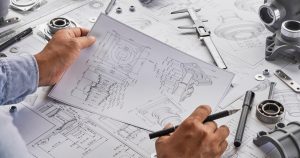
Something that came up a lot in class discussions was the idea that digital systems always make engineering processes better. As someone studying mechanical engineering, I see the appeal. CAD tools, simulations, and automated testing genuinely improve efficiency. But from an interdisciplinary perspective, this claim doesn’t hold up completely.
In most of my classes, we’re constantly reminded that simulations can only approximate reality. Some students emphasized digital accuracy without acknowledging that real world friction, temperature variations, or manufacturing imperfections often break idealized models. Ignoring those complexities can lead to overly optimistic design expectations.
Even environmental science adds nuance while digital prototyping saves materials, the servers powering these systems consume enormous energy. Digital isn’t automatically greener.
So my critique is that many arguments in favor of digital tools lack interdisciplinary balance. Digital methods are powerful, but they’re not flawless. Good engineering and good thinking in general requires acknowledging both strengths and limits across technical, social, and environmental contexts.
Here’s the source to help me generate an general idea of what to write.
Source:
“Create a blog post for each respective bullet point.”, Gemini, 07 Dec. version, Gemini 2.5 Flash, 25 Sep. 2025, Google Gemini.